“We are only here for the crossing.“
WARNING: THIS PAGE CONTAINS SPOILERS. It is best read after finishing the novel.
This conversation first appeared in the back pages of The Sava Crossing. The version here includes photographs from the places and people that shaped the novel, along with links to the history behind it. If you’ve already read it in the book, the images will change the way some of these answers land.
The novel is unflinching about violence, occupation, and the murder of children. How did you think about what that asks of the reader?
A beta reader told me she couldn’t pick up the manuscript. Not because of the writing — because of the world. She said what was happening around her was already so heavy that she couldn’t take on more weight, even fictional weight. I told her that her health mattered more than any book, and I meant it. But the conversation stayed with me.
I went back to the manuscript and realized I’d been so committed to the honesty of the darkness that I hadn’t given the reader enough of what the darkness was threatening to destroy. So I added small moments. Gran joking about the puppy eating her slipper. Little Monika asking Bridgette where the bears live on a map, and when asked where she’d put them, answering with great seriousness: “Near Wilhelm.” The Sparrow kids making fun of the cathedral porridge. And Mara — who never laughs — laughing at Hap losing at chess.
A child who still wants to find bears is a child the occupation hasn’t broken yet. Teenagers joking about bad soup are still, underneath everything, teenagers. These moments are the reason the crossing matters. They’re the love that can be lost.
Another beta reader put it better than I could: you can’t water down history, but you can allow the reader a break and a snicker within the genre.
If the weight of the world brought you here, you’re not alone in that. No one in this novel crosses alone. That may be the truest thing in it.
Where did this novel begin?
Gregory Freeman’s The Forgotten 500 , the true story of American airmen shot down over Yugoslavia and rescued by villagers who risked everything to shelter strangers, is where all of this began. The book gave me Hap, but it also planted something else. Freeman describes how entire communities lived under the threat of German retribution, including children, who found small ways to help the resistance while knowing what it could cost their families. I remember thinking how extraordinary that was — and wondering what it would be like to write about a child’s experience inside that world. Not a child on the margins, but one at the center of it.
That idea stayed with me for years. I didn’t get serious about writing the novel until my condition forced me into early retirement, but the question never left. And then, during my research into the Yugoslav resistance, I found the story of Lepa Radić. She was seventeen years old when she was captured and hanged after refusing to betray her comrades.
Her story stayed with me for a long time. I tried to imagine the decision I would have made at seventeen — whether I would have been capable of what she did. I don’t know the answer. But I believe most of us never know how strong we are until we have to be. That conviction planted the seed that became the Sparrows.
Once I had an American pilot falling into occupied Croatia and a network of children fighting back, the rest of the novel grew from the question: what kind of family would be caught between those two worlds? Over the course of writing this book I used three different editors. One told me that it had real potential but it was missing something. I already knew it is best to write what you know. So I did. My personal experiences and my family’s history became that missing piece.
The Stanica name has personal significance for you.
My research suggests Stanica was likely my father’s family name in Romania before it became Stanley. My mother arrived from England on the Queen Mary’s maiden voyage. When I discovered that connection, I knew the name had to be in the book. It wasn’t born from any personal hardship over the name. It was the opposite. It was something I was proud to acknowledge as my family’s legacy, a way of honoring where we came from. I knew my family and friends would appreciate seeing it woven into the story. When I gave Yedi a Romanian father and Bridgette an English background, I was drawing from my own family’s roots, and it felt right to let those roots hold up the fiction.
There’s one more family connection hiding in the novel. My siblings are Darrell, Sheryl, and Lee — and Deesl’s name came from theirs: Dee from Darrell, S from Sheryl, L from Lee. I’ve called my brother Dee for most of my life. The name was always family.
You lived in Alaska for thirty years. How does that connect to a novel set in Croatia?
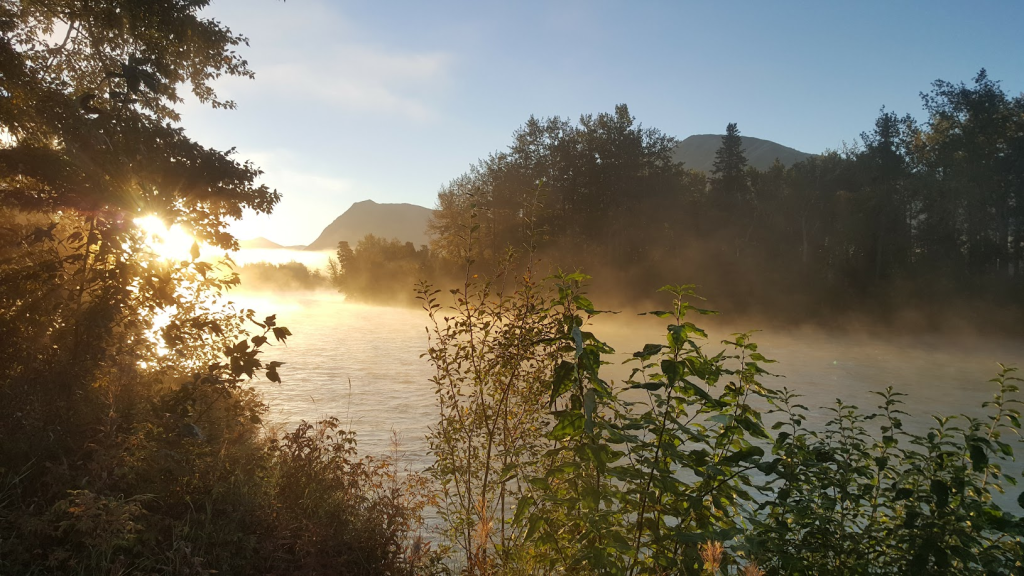
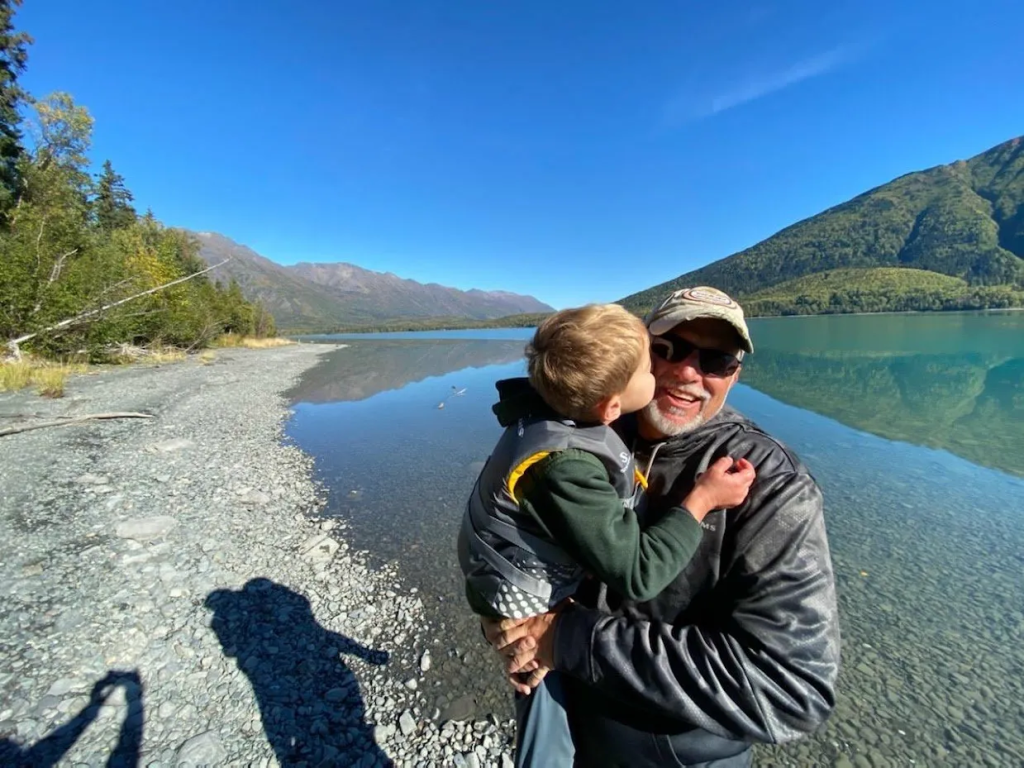
When I discovered the Sava River flowed through the region I was researching and that its waters ran turquoise, the same impossible color as the Kenai, things began to take shape. I wanted the Sava to be a presence in this book, the way the Kenai had been a presence in my life.
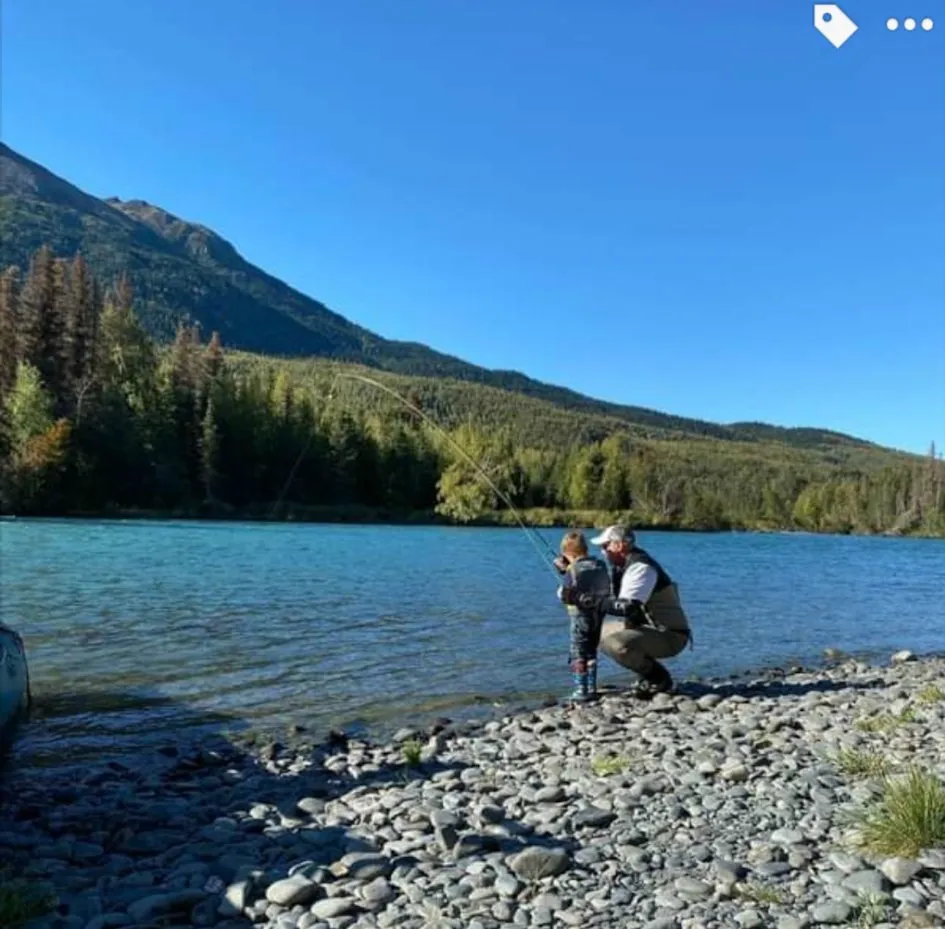
I will never forget the first moment I saw the Kenai River at Cooper Landing, Alaska. It was the most beautiful thing I had ever seen. I didn’t know a river could be that color. I will never forget the first rainbow trout I caught there, the first time I rowed through the Canyon myself.Thirty years on that water. When Yedi and Dee cast their lines into the Sava, when the ashes return to the current in the epilogue, I was writing about a relationship I know. The river doesn’t care about borders or wars or time. It just carries what you give it.

The novel uses a chess motif that appears several times — Father Kovac’s game with Dee, Metzger’s black knight, Rainer’s observation about the king. Where did that come from?
My father taught me to play chess. He crafted his own chess set, the board and every piece, by hand. Those evenings across the table from him are some of the biggest memories I carry from my childhood. I can’t play anymore. My neurological condition flares under stress and suspense. But the memory of learning the game from my father’s hands, on pieces he built himself, is something the condition can’t take from me. I wanted Dee to carry a version of that same inheritance. Something his father gave him that stays in his mind even when everything else is gone.
Like Boo, my father died from a heart condition. He passed during my first trimester at chiropractic school. I knew he would want me to hold it together, and I did, the same way Dee does: by reaching for the things he taught me. Father Kovac’s chess game wasn’t in the original chapter. But I needed something to pull Dee back from the edge after the farmhouse, and I knew what had pulled me back from mine.
The thing your father taught you can save you when nothing else can. That idea came directly from my own experience. Writing this novel was enormously hard on my condition. But like the characters in this book, it felt like something I had to do regardless of the cost.
Once that scene existed, chess started appearing in other places naturally. Metzger’s black knight, a gift from the Reichsführer, became a symbol of how he sees the world: a game of sacrifice where the king never moves. And Rainer’s line about his father — “Every piece must be sacrificed for the king. Except the king never moves. He just waits while everyone else dies” — came from a child’s mouth because children see truths that adults have learned to look away from.
The “crossing” phrase appears throughout the novel. How did that motif develop?
It came directly from my condition and from asking myself, during the worst of it, whether everything — the pain, the loss, the fear — was worth it. Whether the suffering had a purpose or was just suffering. I imagined my characters asking themselves the same question. Yedi, forced to operate on men he can’t save. Bridgette, enduring Metzger’s predatory attention to stay alive for her son. Hap, six thousand miles from his daughter, choosing to fight for someone else’s family because mercy demanded it. Dee, killing a boy who once showed him mercy. All of them wondering: is this worth it? Is the crossing worth the weight?
Sometimes, in the worst moments, wondering whether death itself would be the mercy.
But like Yedi, who felt his father’s temptation in that castle and chose his family instead, I decided that isn’t the mercy. The love is. My son’s voice at the dinner table. The people who see me at my worst and love me anyway. I would choose it all again, every bit of the weight, if only to feel that love. And somewhere in that decision, I learned something harder than enduring the pain: I had to learn to love myself through it too. To believe I was worth the crossing, not just the people I was crossing for.
There’s a reason gratitude appears in this novel alongside the suffering. Yedi teaches Dee to be grateful by the river long before the war takes everything. Dee tries it on a fire escape while eating scraps from a garbage bin, and it works. Barely, imperfectly, but it works. I am currently disabled by my condition. But I know it could always be worse. It is worse for so many others who have had to be far stronger than me to endure their own conditions or circumstances. That awareness isn’t resignation. It’s gratitude. And gratitude, in this novel and in my life, is the thing that keeps the crossing from feeling like punishment. It’s what makes the weight bearable.
That’s where the motif was born. Not from philosophy. From pain. And the answer the novel arrives at — “We leave the divine light to enter the weight. The blood. The love that can be lost. Because only then does it become real. That is the mercy. Love is the eternal gift” — that answer cost me something to write. It had to, or it wouldn’t have been true.In the novel, the phrase starts as something Dee can’t understand. He hears it from his father as a boy by the river and it means nothing to him. It returns when he’s starving on a fire escape in Zagreb, and he still can’t hold it. After Jakob’s death, Yedi explains it, and for the first time it has weight. But it only becomes fully Dee’s when he stands in the Sava twenty-four years later and speaks it aloud while scattering his parents’ ashes. The reader has been carrying those words as long as Dee has. They finally understand them at the same moment he does.
The medical subplot involving Project Reines Herz is disturbing. How much of it is based on reality?
The castle and its specific experiments are fictional, but the history they draw from is not. The regime’s obsession with racial purity produced real medical programs that treated prisoners as raw material: transplant experiments, forced surgeries, research that no ethical boundary could contain. The idea that they would poison healthy prisoners to create the very conditions they wanted to treat is not far from what actually happened. The ideology that a “pure” heart could surgically correct “impure” blood is imagined, but the belief system that produced it was real and operational. I’ll name one liberty plainly: the surgery itself runs ahead of the medicine. Transplantation as I depict it wasn’t possible in the 1940s — that capability came decades later. But the science was never the point. The ideology was, and the ideology was real.
What I wanted to show through Yedi was how a good man navigates an impossible situation. He can’t refuse. They’ll kill his family. He can’t fully comply. People will suffer and die for nothing. So he does what he can: he names every patient, he documents everything, he sabotages the compound when he can get away with it, and he hides the evidence. His resistance isn’t dramatic. It’s quiet, daily, and it costs him everything, including, I believe, his sense of himself. He does what’s necessary and survives it, but I don’t think Yedi ever fully believed his own conscience survived intact. That’s a wound the novel doesn’t heal for him, because some wounds can’t be healed. They can only be carried.
To learn more about the history behind the castle chapters: Jasenovac Memorial Site and Museum
United States Holocaust Memorial Museum — Jasenovac Collection
Bridgette operates essentially as an intelligence agent inside the castle. Was she always conceived that way?
Not initially. She started as a captive, a mother separated from her child, enduring. But the more I wrote her, the more I realized she wouldn’t just endure. Her father was a locksmith. She studied at Oxford. Her thesis explored how Athenian teachers hid democratic ideals under Spartan occupation. She spoke multiple languages and had already left England to build a life in a foreign country. This is not a woman who sits in a room and waits.
More than that, she was a strong mother who taught through example. She would not have wanted her son to see her as merely a captive. Everything she does at the castle — the mapping, the stolen letter opener, the lock-picking, the files, the evidence — is a mother showing her son, even in absentia, that you don’t surrender to the people who took your family. You fight them with whatever you have, even if all you have is a hairpin and a locksmith’s daughter’s hands.I understand that kind of love from the outside looking in. My condition prevents me from doing many of the things I wanted to do with my son: the camping trips, the physical adventures, the hands-on teaching a father imagines he’ll do. His mother has filled that role with a grace and determination that reminds me of Bridgette. She became his Boy Scout leader, teaching him the things I couldn’t, leading by example the way strong mothers do. Bridgette’s fierce, practical love, the kind that finds a way even when every door is locked, is something I’ve watched happen in my own home.
So the castle chapters became an espionage story. The silk gowns Metzger forces her to wear became part of it too. She’s performing a role while running an operation underneath it. There’s a scene where Bridgette hears something terrible happening deep in the castle, and she has to decide whether to lock her door or find out what’s behind it. That’s the moment I knew who she was. Not when she picked the lock or stole the files. When she chose to walk toward the sound instead of away from it. Everything else followed from that single decision.
There are three distinct handkerchiefs in the novel. Was that intentional?
There’s a funny story about that. My son was seven at the time, and we were having dinner. I mentioned something about adding another handkerchief reference and he said: “Are you writing a book or having some sort of handkerchief-fest?” That’s when it was decided that three was the maximum.
But yes, each one carries different weight. Miri’s mother’s handkerchief is love and trust. Klaus’s bloodstained handkerchief is guilt and the cost of violence. Claudia’s gold-embroidered handkerchiefs are grief and defiance. They’re the same object doing very different emotional work, and the fact that they echo each other is deliberate. A handkerchief is intimate. It’s carried against the body, it absorbs what you can’t show the world. That felt right for a novel about what people carry inside.
The novel leaves several fates unresolved: Anka and Mara, the Sparrows besides Miri, even the oilcloth evidence. Was that a deliberate choice?
Completely deliberate, though it almost wasn’t. One of my beta readers, who gave invaluable insight throughout the development of this novel and helped shape many of the questions you just read, told me she couldn’t wait to find out what happened to Anka and Mara. I remember telling her to keep reading, knowing she was likely going to be disappointed. When she finished, the disappointment was clear. She wanted them to be okay. I considered changing their fate. I sat with that feeling for days.
But I kept coming back to the same conviction: that was exactly what I wanted the reader to feel. The ache of not knowing. The refusal of the neat ending. War doesn’t give you closure. It gives you silence where answers should be. Miri’s line — “Some stories the war keeps” — is the novel’s position on this.
Tens of thousands of children participated in Yugoslavia’s resistance. Most of their stories are lost. The silence in this novel honors that. I am deeply grateful to that reader for pushing me to sit with the question long enough to be sure of my answer, and for so much more that she helped me with in fine-tuning this work.
The Author’s Note in the book recommends the works of historians Jozo Tomasevich and Marko Attila Hoare for readers seeking to understand this history more deeply.
The novel opens with light on a porch and closes with light in a dream. How did that structural frame come together?
I want to give credit where it’s due, because this was probably the single greatest addition to the novel and it didn’t come from me alone.
The novel already opened with light. “Cold water. Warm sun.” But the early chapters still had problems I couldn’t solve. I knew I wanted to end with light. “And in the dream, the light held.” That felt right as the final note. But the beginning wasn’t landing the way it needed to. Then one of my beta readers suggested I add a chapter before what had been Chapter 1. That feedback unlocked everything. It solved problems I’d been wrestling with in the opening and gave far more weight to the Goldstein family and to the world that was about to be destroyed. Once that new chapter was in place and opened with “Morning light pooled on the Goldsteins’ porch like something poured from a jar,” I saw what light could do structurally, not just open and close the novel, but mark every major turning point.
And it does more than bookend. Light closes every major structural unit in the novel. Chapter 1 opens with it: morning sun you can feel on your skin. The final chapter ends with it: “the sun broke through the canopy, and for just a moment, the snow-covered path ahead blazed with light.” And the epilogue ends with it: “And in the dream, the light held.” Three beats, each one further from the physical world than the last. Porch light. Canopy light breaking through for a moment. Dream light that can’t be held but holds anyway.
Then the crossing motif’s epigraph page came together: a single line, We are only here for the crossing, on its own page before Part 1. The crossing opens the book as pure abstraction and reaches its fullest moment inside the epilogue — a man standing in cold water with two jars of ash, speaking the words aloud. But it’s not the last thing the reader holds. Light gets the final word. After the philosophy, after the grief, after the ashes join the current, the novel’s last gesture isn’t an idea. It’s warmth. Presence. A dream where the afternoon stretches endless and golden, and the light holds.
I owe that reader more than I can properly express here. She changed the shape of the book.
What Readers Are Asking
This section will grow as readers and book clubs share their questions. If something in the novel stayed with you — a scene you can’t stop thinking about, a character whose choice you’re still debating, a detail you want to know the story behind — I’d like to hear it. Send your question to fynnsava@gmail.com and the best ones will be added here.